Personality and character are often treated as the same thing, yet they describe two different levels of a person. Character is the core you were born with: genetically innate and the same for your whole life. Personality is what experience, surroundings and upbringing make of it: the role you play in the world.
In everyday life, this difference is more than hair-splitting. If you want to understand why certain situations keep repeating in your life, you are usually looking in the wrong place.
Which came first: personality or character?
In my view, the answer is clear: character. It was there before you had your very first experience. It holds how you fundamentally perceive the world, how you react under pressure, how much closeness you need and at what pace you make decisions.
Personality only develops afterwards. It grows with whatever you encounter: your family, school, work, the people who shape you. It is flexible, it keeps learning, it adapts. You could say character is the foundation and personality the house built on it over a lifetime, with extensions, renovations and sometimes an entirely new façade.
Persona means mask
A look at where the words come from makes the difference tangible. “Personality” goes back to the Latin persona. In ancient theatre, that was the name for the mask an actor wore, and so also for the role he played.
This is not a value judgement. Masks are useful. We need roles: at work, in the family, among friends. Personality helps us move through the world and get along with others. But it is what we show, not necessarily what we are.
“Character”, on the other hand, comes from Greek. Charaktḗr originally meant a stamp for making impressions, and the mark it leaves behind: something imprinted that cannot simply be wiped away.
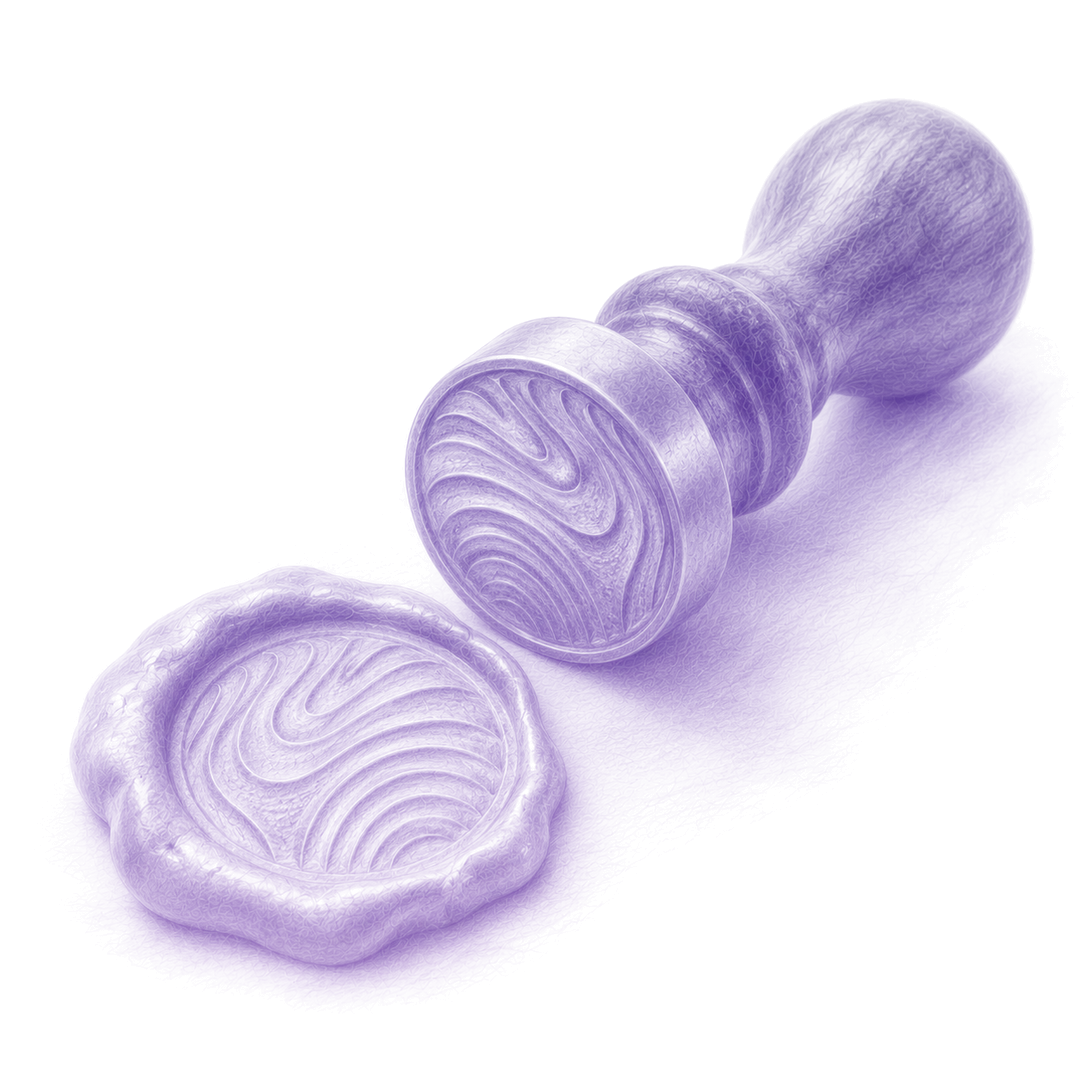
Personality is the role you play. Character is the person playing it.
Genetics and epigenetics: disposition and imprint
In human morphology, we assign the two to different levels. Character corresponds to genetics, to what is innate. Personality corresponds to epigenetics, to the way environment and experience help decide which dispositions come into play and which stay in the background.
The dispositions themselves don’t change over a lifetime. What changes is how they are lived. That is why two people with similar dispositions can take very different paths, depending on what has shaped them. And it is also why you are not at the mercy of your natural disposition. You can shape how you live with it. You just can’t swap it for another one.
Why you should look for patterns in your character
Almost everyone knows the feeling: a situation repeats itself. After a year, the new job feels just like the old one. The new partner stirs up the same feelings as the last. The same conflict keeps turning up in new costumes.
The obvious response is to work on your personality: a communication course, a new behaviour, a good resolution. That can help, but often only for a while. Because if you only work on the mask, you change the costume, not the character wearing it.
If you want to resolve a pattern that keeps coming back, I believe you shouldn’t look for it in your personality, but in your character. Not in the outside world, but in what you were given from the very start.
Patterns often arise where role and disposition don’t fit together, when someone constantly plays a role that works against their nature. If you need plenty of quiet to recharge but present yourself every day as the tireless host, sooner or later you will reach the same point. Whatever the job, whatever the relationship.
An example
Imagine a woman who, in every new team, soon ends up taking responsibility for everything, and then feels overwhelmed and overlooked. She has learnt time management, practised setting boundaries, changed employers. The pattern stayed.
A look behind the mask shows something else. She has an innate, strong need to be needed, and at the same time a pace that calls for more breaks than she allows herself. As long as she only works on her behaviour, she is fighting against herself. Once she understands her natural disposition, she can choose roles that suit her.
How can you recognise character?
Personality shows in behaviour, and behaviour can be captured with questions. That is exactly what personality tests do. But they mainly describe the self-image: how someone sees themselves and how they behave in their role. Character is hard to capture with questions, because it is precisely the part of ourselves we tend to see least.
Human morphology takes a different route. It looks at a person’s form, the head, face and body, and reads what is innate from the interplay of many features. Not from a single feature, but from the overall picture. Your form has grown over many years and doesn’t change with the mood of the day. It shows what lies behind the mask. How human morphology works
What this means for you
You are free to develop your personality as much as you like. But it carries you best when it builds on your character rather than working against it. So if you want to resolve a pattern, don’t start by asking: what do I need to do differently? Ask instead: what is my natural disposition, and am I living in line with it?
Frequently asked questions
Can character change?
Character, as a natural disposition, stays the same throughout your life. What changes is how you live it, and that is the job of personality.
Is a personality test the same as a character analysis?
No. A test asks how you see yourself and how you behave. A human morphology character analysis describes what is innate in you, regardless of how you happen to rate yourself at the moment.
What matters more: personality or character?
Both. Character is the foundation, personality is what you build on it. Things usually get difficult where the two don’t fit together.