Because they neither bring the same things with them nor live through the same things. Siblings share a home, but not their natural disposition. Nor do they share the same childhood, even when it happens under one roof.
What each child brings
A mix all of its own. Every child inherits dispositions from both parents, but never in quite the same combination as a brother or sister.
That is why siblings are often alike and yet fundamentally different: the same pace, but a completely different need for closeness. The same persistence, but in two entirely different areas.
The features are the same in everyone. How they combine is different in each person, even in children of the same parents.
The same home is not the same childhood
The second child is born into a different family from the first. Different parents, even though they are the same people: a few years older, more experienced, perhaps more relaxed, perhaps more tired.
Then there is position. The first child had the parents to itself for a while. The second has someone ahead of it from the very start, someone to measure itself against or to set itself apart from.
And then there are life’s circumstances: a move, a change of job, a difficult period. What one child experiences at six, the other experiences at two, and that is not the same event.
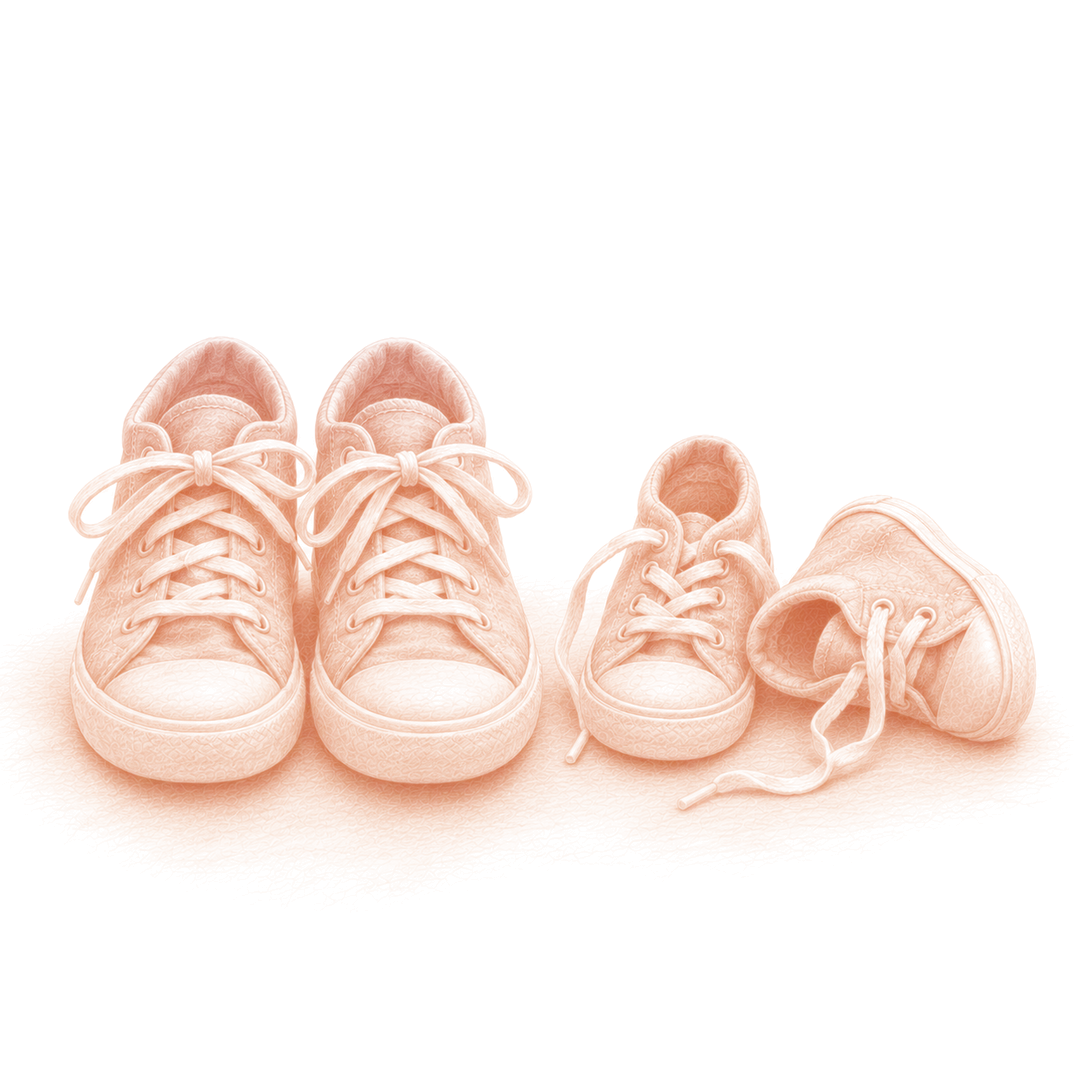
Why the same sentence has opposite effects
Because it lands on two different children. “Come on, make an effort” can be exactly the push one child needs. In the other, the same sentence makes them withdraw and stop trying altogether.
The same goes for praise, for rules, for freedom. One child flourishes when allowed to work things out alone. Another first needs to know that someone is close by.
Parents usually notice this and then start doubting themselves, because the same upbringing produces two different results. It doesn’t produce two results. It meets two different people.
The comparison is the problem, not the difference
Comparisons happen on their own, because siblings grow up side by side. “Your sister could already do that at your age” is quickly said and long remembered.
The child doesn’t learn to be quicker from it. It learns that, just as it is, it lags behind. Comparison takes away the joy, and often the wish to try at all.
So fair doesn’t mean equal. Fair means each child gets what it needs, and with two children that is rarely the same thing.
What it gives you as a parent
Above all, relief. Once you know what your child brings, you stop parenting against a natural disposition that can’t be parented away anyway.
A human morphology character analysis is possible from about the age of three. With children, it focuses mainly on how they perceive the world, what they need in order to feel safe, and where their talents lie, including the ones nobody has noticed yet.
It makes no diagnosis and does not replace medical or therapeutic support. It describes.
From practice
The parents of two boys described the younger one as difficult. The elder did what he was asked, while the younger argued over every instruction.
The analysis described a child who only understands things once he is given the reason, and who doesn’t reject rules but looks for the reason behind them. Since then the parents have changed one habit: they give the reason too. After a few months, they say, the negotiating has almost stopped.
What this means for you
Your children are not different because you did something wrong with one of them. They are different because they are different people, and that was the case from the very beginning.